

The Open Day of the European Digital Innovation Hub for the North Central Region showcased practical applications of artificial intelligence, robotics and digitalisation for small and medium-sized enterprises.
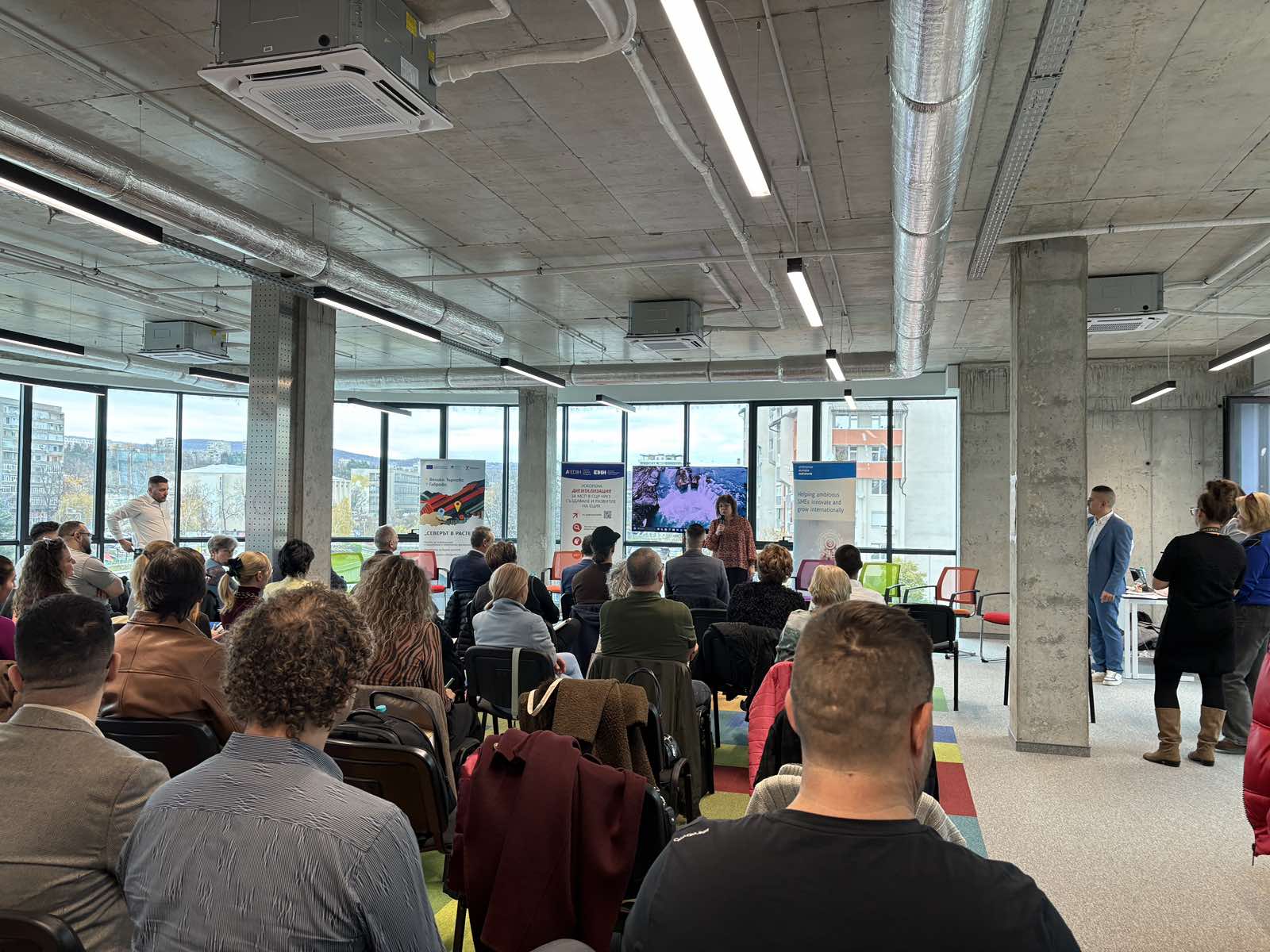
On 18 November, the Scientia business building in Gabrovo brought together entrepreneurs and technology experts for the Open Day of the European Digital Innovation Hub (EDIH) for the North Central Region. Under the title “From Artificial Intelligence to the Smart Factory”, the event showed how new technologies can be put to practical use in everyday work and production.
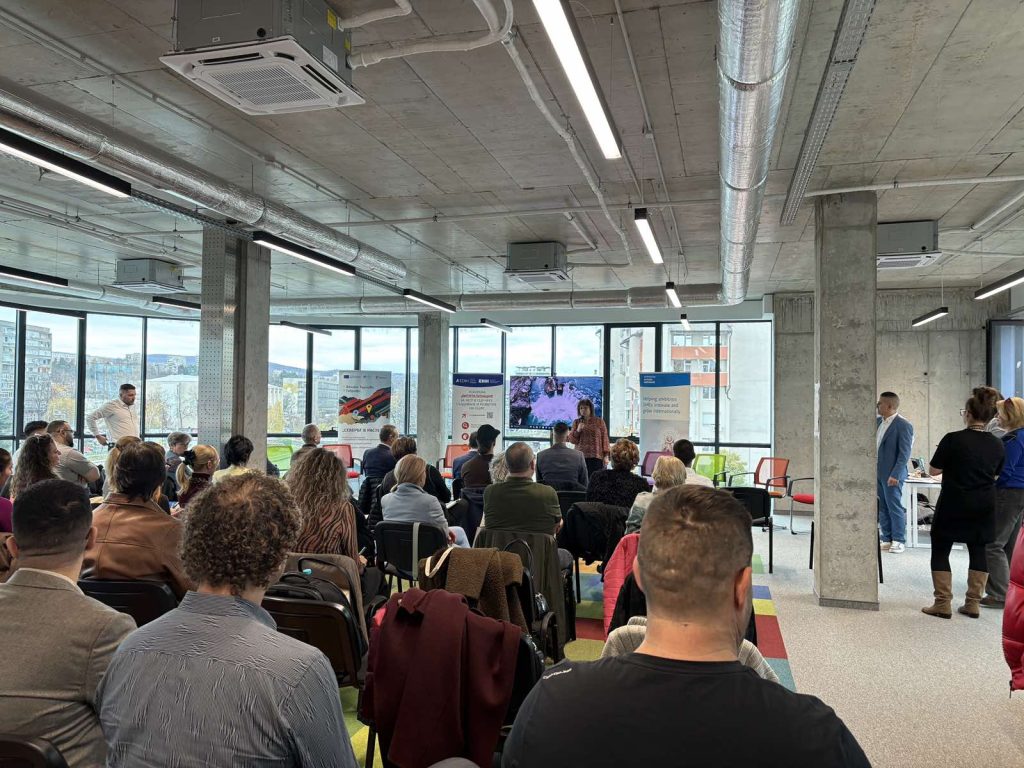
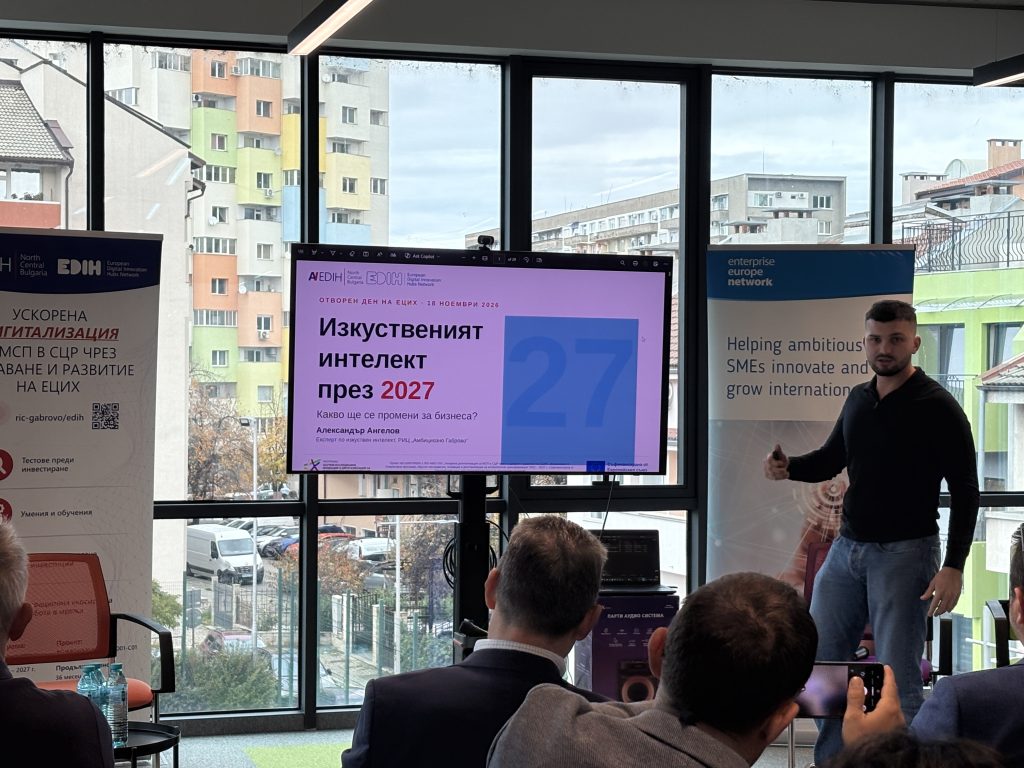
AI expert Alexander Angelov gave a talk titled “Artificial Intelligence in 2027: What Will Change for Business?”. His focus was on when completing tasks faster actually produces a real economic result. Data from the presentation showed that Bulgarian enterprises are using AI more and more. However, the share of companies with 10 or more employees that use such solutions is still below the European Union average. His advice to businesses was to start with one specific process, a measurable goal and clear rules for protecting company data.
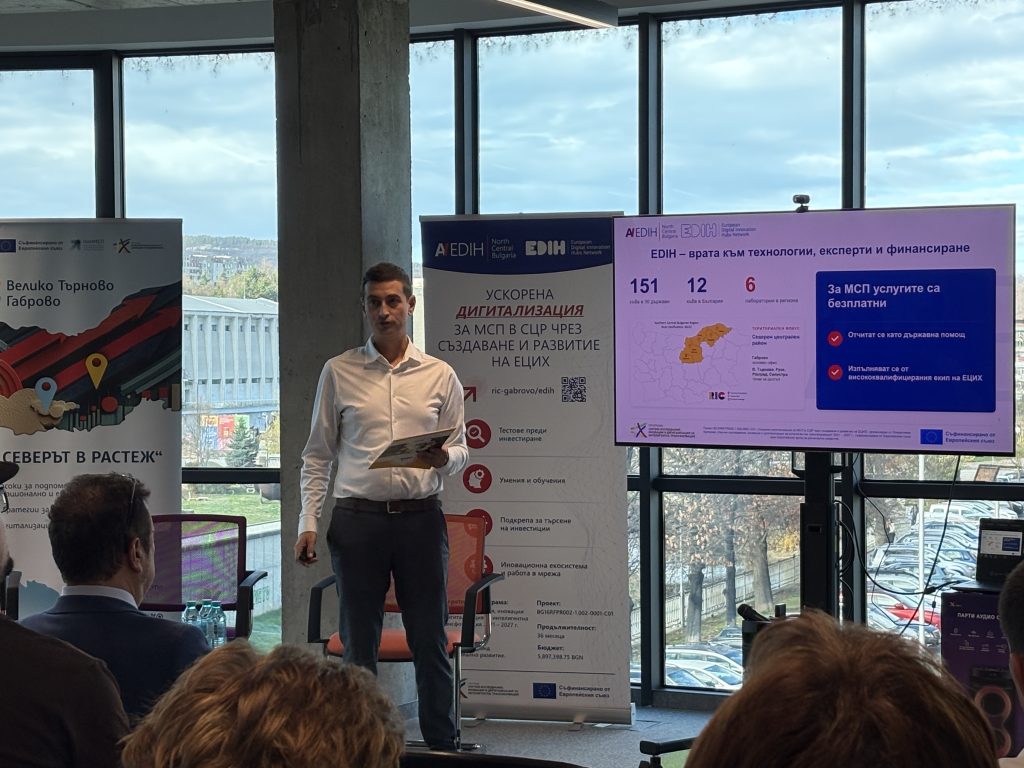
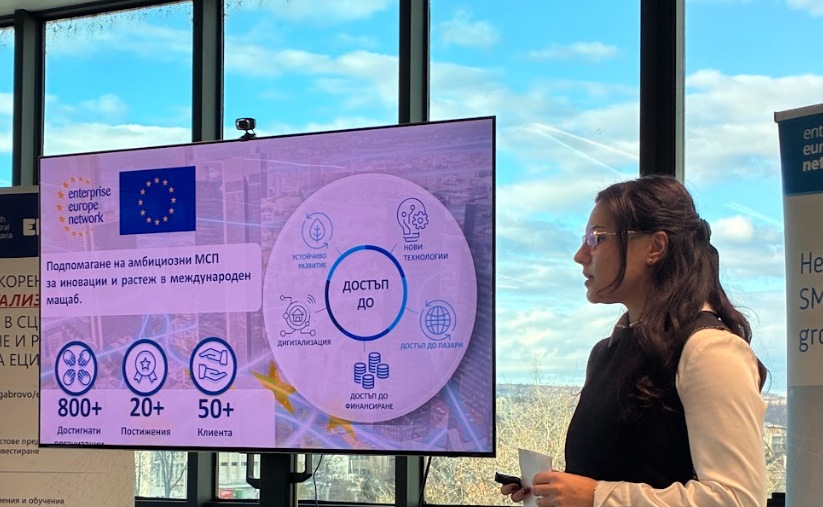
Svetoslav Mateev, Director of the EDIH for the North Central Region, presented the support the hub offers to enterprises: testing of technologies and materials, staff training and help with finding funding. These services are free of charge for small and medium-sized enterprises under the applicable state aid rules. Companies can use the hub’s six laboratories to check whether a solution suits them before they invest their own money.
Another focus was the practical use of artificial intelligence in administrative processes and planning. Speakers showed how AI can help draft emails, quotations and contracts, track communication with customers and support production planning. Production planning needs reliable data on orders, warehouse stock and machine capacity. The main takeaway was that enterprises should first decide which processes they want to improve and how they will measure the results.
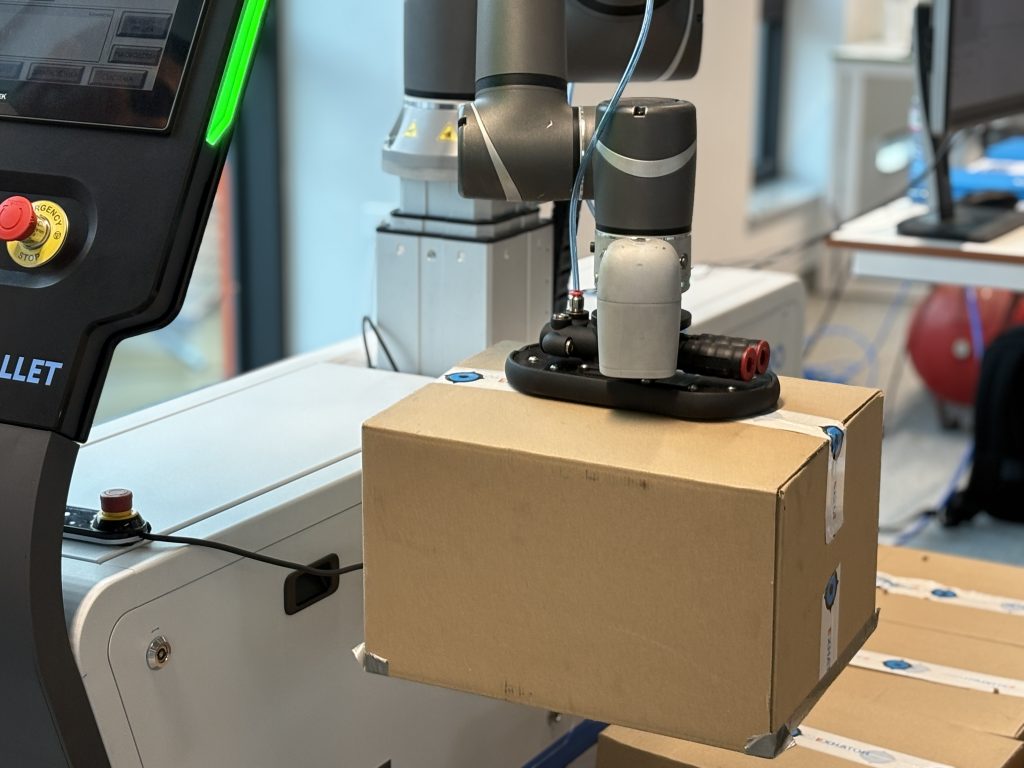
Live demonstrations showed the technologies in action. The Akhnaton team presented a palletising robot and a robotic cell for pick-and-place, sorting, assembly and visual inspection. Using cameras, machine vision and artificial intelligence, the system detects deviations and removes defective parts. TechnoPro demonstrated printers and digital labelling solutions. These give companies more flexibility with small batches and new product launches, and they can reduce waste and obsolete stock.
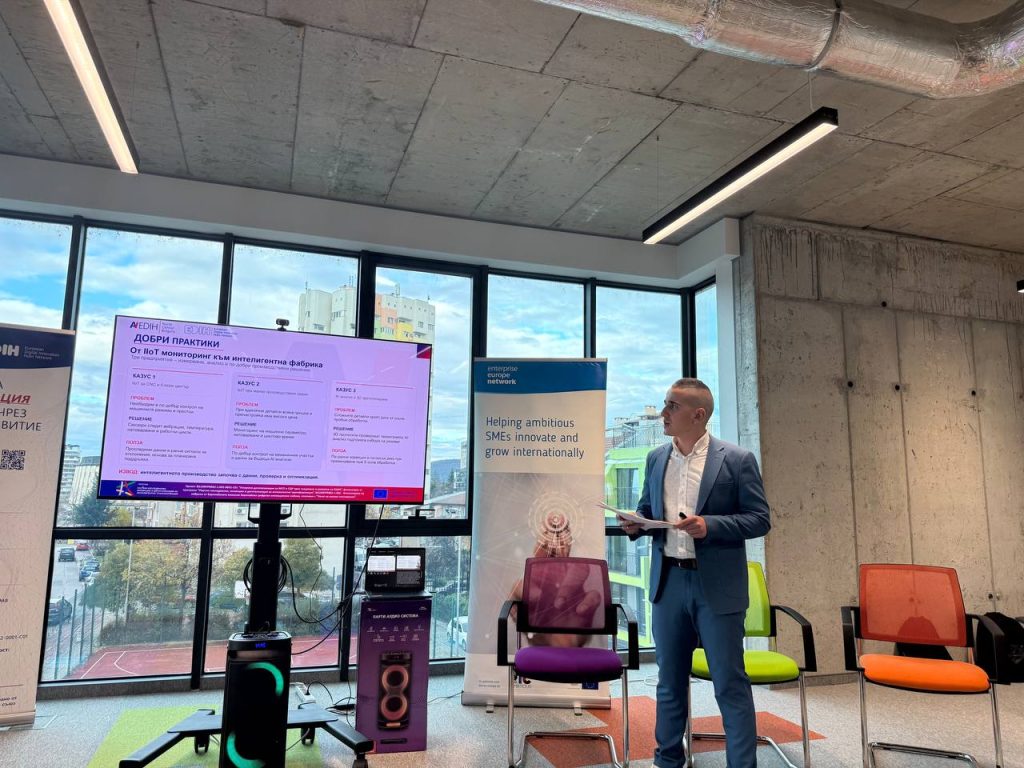
RIC experts Maksim Sadinov and Danitsa Yanakieva shared practical case studies using a “problem – solution – result” model. The cases showed how the specific needs of enterprises connect to what technology can do.

The panel discussion “What Is Stopping Bulgarian Enterprises from Becoming Smart Factories?” was moderated by Alexander Angelov and Svetoslav Mateev. It brought together representatives of business, academia, public institutions and industry associations. The panel discussed the return on investment from automation, error analysis, preparing projects for funding, skills development and data security. Participants also talked about the balance between technology and the human factor: automation supports the work, but people are still needed for expert judgement and responsibility.
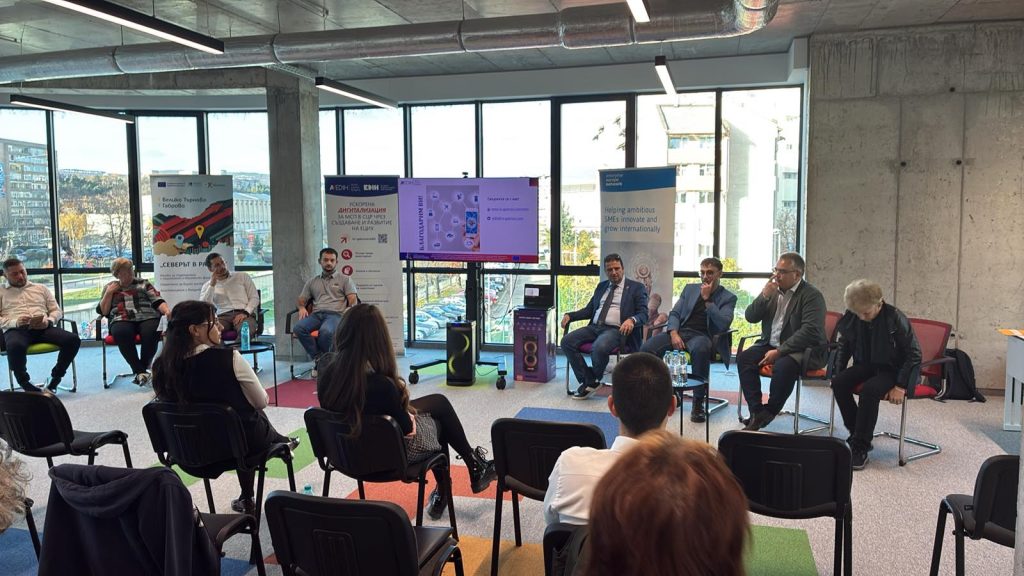
The event ended with questions and an open discussion. The EDIH for the North Central Region invites small and medium-sized enterprises to contact the hub’s team and explore the options for technology testing, training and expert support. This is a practical step towards more efficient and competitive operations.
This news article was produced with the financial support of the Programme “Research, Innovation and Digitalisation for Smart Transformation” 2021–2027, co-financed by the European Union through the European Regional Development Fund under project BG16RFPR002-1.002-0001-C01 “Accelerated Digitalisation for SMEs in the North Central Region through the Establishment and Development of an EDIH”. The Regional Innovation Centre “Ambitious Gabrovo” bears full responsibility for the content of this document, which under no circumstances may be regarded as reflecting the official position of the European Union or the Managing Authority.