ARIES4

Alliance of regional innovation ecosystems based on smart sustainable specialisation strategies

Backgound of the project

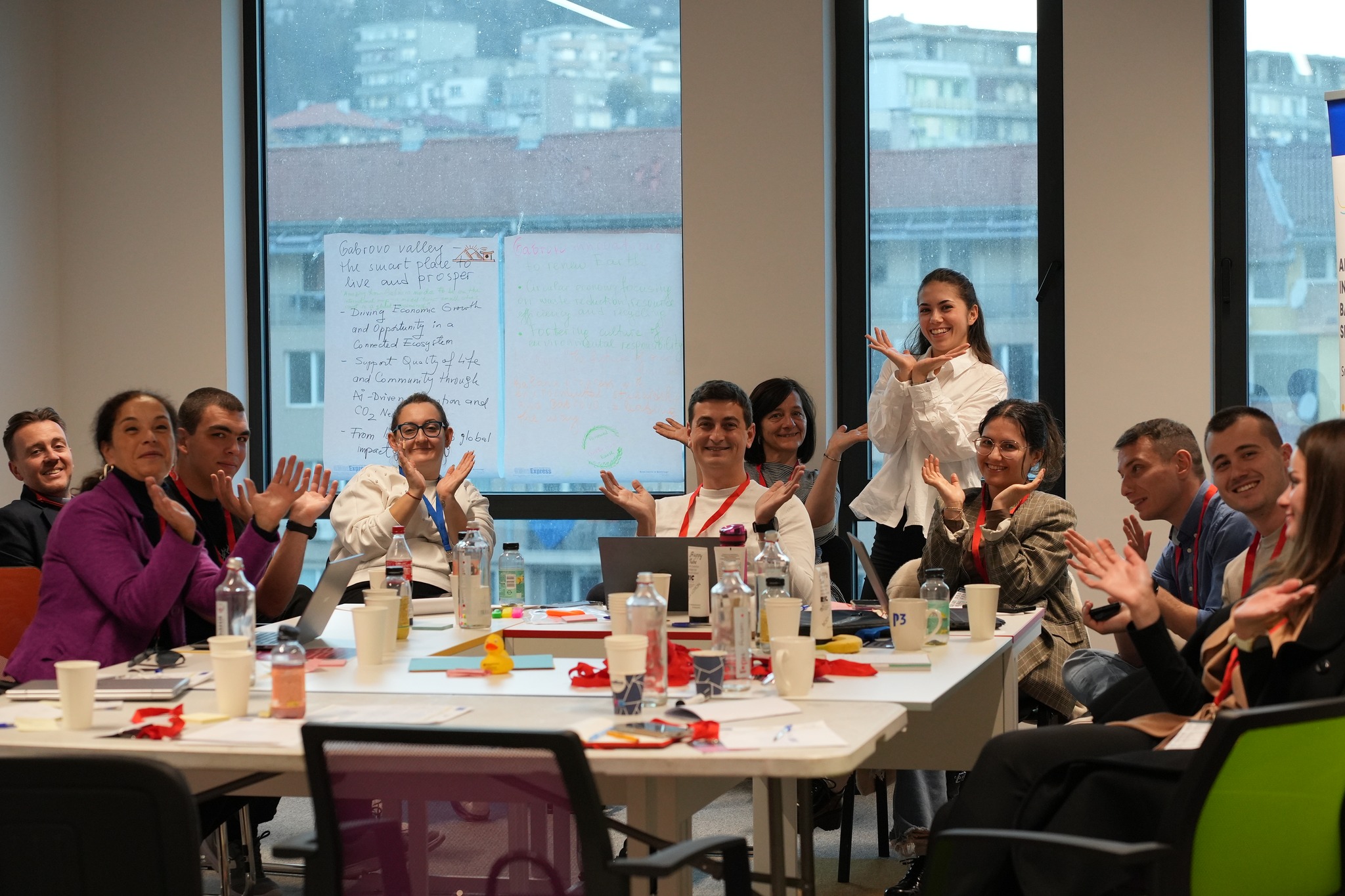
Smart specialization is a European innovation policy characterized by the identification and strengthening of regional competitive advantages with the participation of a wide range of stakeholders. In the context of the European Green Deal and the 2030 Agenda for Sustainable Development, smart specialization strategies are transitioning to sustainable smart specialization strategies—strategies in which sustainability plays a key role. The ARIES4 project is an alliance of four European regions that are pioneers in this transition. The aim of the project is to create a framework for cooperation and knowledge sharing between the main actors in smart specialisation strategies: universities, vocational training organisations, the public sector, the business sector and society at large.

Our specific objectives

To promote knowledge creation and exchange among S3 agents (HEIs, VET providers, business sector, public sector and society in general) of several European regions, in order to strengthen the evidence base for the design and implementation of regional smart specialisation strategies, and to provide tools for its monitoring.

To foster corporate social responsibility and the transition to more sustainable business models, by developing training material based on best practices, building analysis tools for companies, and identifying and providing the skills required by company managers to drive the transition.

To stimulate entrepreneurial attitudes, mind-sets, and skills among the participant actors of regional innovation ecosystems, with a particular emphasis on HE and VET students, and to address this entrepreneurship to the challenges of the sustainable transition.

To generate communication structures to foster interaction within regions and among them, quickly communicating the generated knowledge and projecting it towards the rest of European regions.

About the project

As the European Commission points out, Smart Specialization is an innovative approach that aims to boost growth and jobs in Europe, by enabling each region to identify and develop its own competitive advantages. It brings together local authorities, academia, business spheres and civil society, to define and implement long-term growth-oriented strategies supported by EU funds. To date, more than 120 smart specialization strategies have been developed in Europe. Smart specialization is now facing a major evolution with the proposal of moving from the current smart specialization strategy (S3) to smart specialisation strategies for sustainable and inclusive growth (S4+).

As noted by a recent report published by the Joint Research Center of the European Commission “S4+ means reinforcing the S3 mission-oriented policy approach with non-neutrality, direction, and system approach to engage regions in European initiatives dealing with missions. S4+ implies a policy shift in the way regions may consider setting policy priorities to push technological innovation and their responses to regional societal challenges.” This new paradigm in the smart specialization strategy for regions connects these strategies and actors at regional and national level with EU-wide policies such as the European Green Deal and the new European industrial strategy for a sustainable recovery to the new green and digital economy, an also with the 2030 Agenda for Sustainable Development. In this sense, it repositions smart specialisation in the new EU policy agenda to use the unprecedented EU investment for local jobs creation in the post-Covid recovery. This revolutionary transition from S3 to the new S4+ requires the cooperation and alignment of all actors involved in smart specialization strategies:

Sustainability is a multifaceted concept that encompasses technological, cultural, environmental, social and economic aspects. Each agent of an economy experiences different challenges and demands different solutions when confronting it. Besides, place-based policies such as smart specialization can be very effective in fostering sustainability, due to the exploitation of competitive advantages also in this pursuit, but at the same time, they require great amounts of benchmarking and mutual learning.

For all these reasons, knowledge co-creation and sharing is essential in the arrival of sustainable specialization strategies, both between the agents of local innovation ecosystems and between regions themselves. Alliances for innovation are excellent tools for such intra and between-regions cooperation, as they have been conceived to promote precisely those two kinds of interaction.